



Assessment
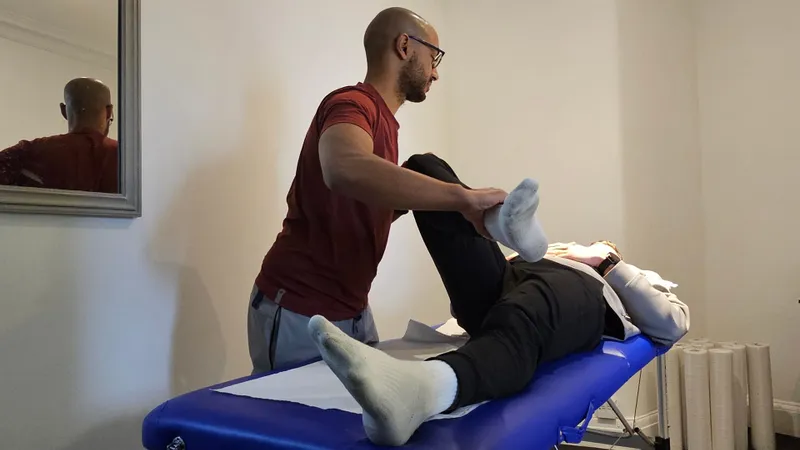
A detailed history, then a thorough examination of movement, strength and the affected area. You leave with a working diagnosis you understand and a plan agreed with you, not handed to you.
Long desk hours hold the neck and shoulders in one position for hours, and eventually the tissue that carries that posture runs past its capacity. Most mechanical neck pain and common shoulder problems, from rotator-cuff related pain to impingement and frozen shoulder, settle well with physiotherapy, exercise and manual therapy.

Overview
Neck and shoulder pain are among the most common reasons City professionals seek physiotherapy, and long desk hours are a frequent contributor. Most neck pain is non-specific and mechanical, meaning no single structure can be pinpointed: the load of holding one posture all day simply outgrows what the tissue can comfortably take. NICE Clinical Knowledge Summaries on non-specific neck pain recommend staying active, reassurance, and exercise with manual therapy as an adjunct, rather than routine imaging or prolonged rest.
Common shoulder problems include:
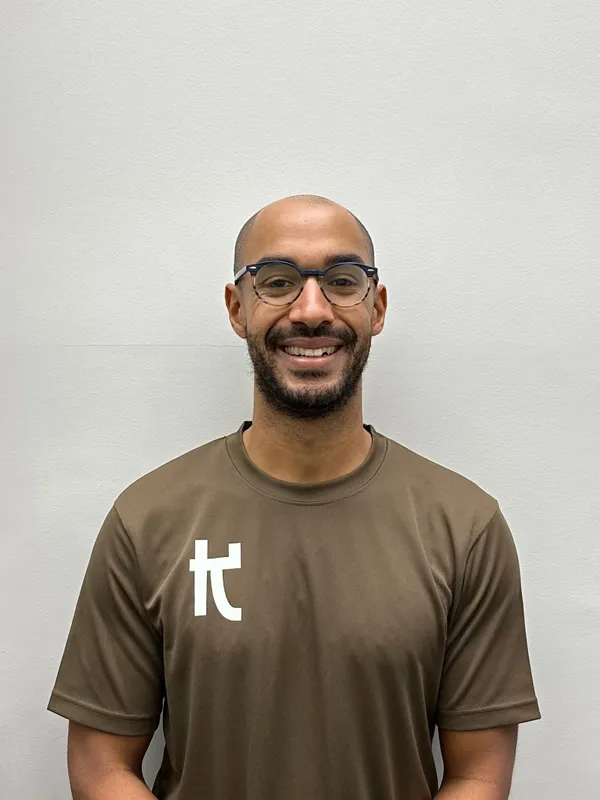
Our team, led on the shoulder and upper limb by Gus, tailors assessment and rehabilitation to your work, training and goals. We settle the painful phase first, then build the strength and load tolerance that makes symptoms settle and recurrence less likely, so the neck and shoulder finish more robust than the desk left them.
Excellent
From 6 five-star Google reviews
Source: Google
David helped me when I started to have a strong tibia pain only 5 weeks before the marathon. I genuinely thought at some point that I wasn’t going to be able to do it and I did my PB!
After suffering with terrible back pain, Gus has helped me make huge improvements. Very professional and happy to explain the processes and treatments. Many thanks
Couldn’t recommend this physio team enough! They helped me recover from a knee injury 3 weeks before the London Marathon which I thought was going to prevent me from running it! Everyone was really friendly, supportive and genuinely cared about helping me reach my goal. Special thanks to Charlie, Gus, Brad and Stef!
I came to Dave with an ongoing injury that I’ve been struggling with for months! He helped sort it out straight away, also giving me some exercises to help target the area to get back to full strength. I’m now back to running pain-free already and training properly — I’ll definitely be recommending Kaizen Physiotherapy to my clients!
Gus worked miracles to get me running a marathon after being injured 6 weeks out. He worked out the issue really quickly and provided a clear and actionable plan to deal with it. The sports massages were the best I’ve ever had too — thanks Peggy! Can’t recommend Gus and Peggy enough.
I had such a positive experience working with Brad at Kaizen. He supported me through a meniscus tear and got me all the way back to running a half marathon and HYROX training. Everything was structured, progressive, and easy to follow, and I always felt like I was in safe hands.
Most neck pain is mechanical and settles well with reassurance, staying active and targeted exercise, with manual therapy alongside, exactly the approach NICE recommends. We avoid routine scans, because imaging findings are common in pain-free people and rarely change the plan.
Rotator-cuff related pain and impingement respond well to progressive loading rehabilitation, and many people avoid surgery altogether. We build the cuff's tolerance gradually, from easing night pain and overhead reaching through to pressing, swimming and racket sports.
Frozen shoulder moves through freezing, frozen and thawing stages, and physiotherapy helps at each one. We manage pain early, avoid aggressive stretching while the shoulder is most irritable, then rebuild mobility and strength steadily as the joint allows.
Long screen hours with a forward-head, rounded-shoulder position load the neck and upper trapezius hard. The fix is movement variety, regular breaks and strength, so we address workstation habits alongside your exercise plan rather than chasing one perfect posture.
Western medical acupuncture is offered by our AACP-registered clinicians as an adjunct for persistent neck and shoulder pain. It sits alongside the core rehabilitation plan when the evidence and your response justify it, never as the whole treatment.
Reformer-based work develops the deep neck, scapular and postural control that protects desk-bound workers from recurrence. The stronger and more varied your movement, the less any single position costs you, and the less often flare-ups come back.
Why it happens
Sustained desk postures from long screen hours with a forward-head, rounded-shoulder pattern loading the neck and upper trapezius
Rotator-cuff related shoulder pain from repetitive overhead loading or a sudden training spike
Subacromial impingement, where the cuff tendons are irritated in the space beneath the acromion
Frozen shoulder (adhesive capsulitis), often spontaneous and more common between 40 and 60
Mechanical neck strain after awkward sleeping positions, sudden movements, or whiplash-type incidents
Scapular and postural control issues that amplify neck and shoulder loading
Stress, poor sleep and low mood, all well-evidenced amplifiers of musculoskeletal pain

Your initial visit runs 45–60 minutes: a detailed history, then a thorough examination of movement, strength and the affected area. We explain what we find in plain English and agree a working diagnosis together.
Treatment starts the same day, and you leave with the first exercises of a plan built around your goal.
Better than yesterday. Kaizen means continuous improvement: small, repeatable gains, built session by session, until you are back to what you love and no longer need us.


Book online through Jane and self-refer, with no GP letter needed. If you are using private health insurance, check your policy first: some insurers ask for a GP referral before your first session.
Everything starts with a proper assessment. We find what is driving the problem, treat it, and build the strength that keeps it fixed, so you finish performing, not just pain-free.
A detailed history, then a thorough examination of movement, strength and the affected area. You leave with a working diagnosis you understand and a plan agreed with you, not handed to you.

Hands-on care to settle symptoms and restore movement: manual therapy, with acupuncture, shockwave or soft-tissue work where they genuinely help. The first home exercises go with you the same day.

Progressive exercise that returns strength, control and load tolerance, from Reformer Pilates to strength and conditioning. Each follow-up reassesses against your baseline, so progress is measured rather than guessed.

Criteria-based milestones return you to work, sport and training. Discharge happens by mutual agreement once you can manage independently, with a Performance MOT available to catch the next weak link early.

Treatment approach
Assessment, manual therapy, and progressive loading exercise is the NICE-aligned first-line approach for both mechanical neck pain and the common non-traumatic shoulder problems, rebuilding strength and load tolerance.
See treatment detail →Offered by our AACP-registered physiotherapists as an adjunct to help manage persistent neck and shoulder pain alongside the core rehabilitation plan, never as a stand-alone treatment.
See treatment detail →Reformer-based work develops the deep neck, scapular and postural control that protects desk-bound workers from recurrence, complementing the active rehabilitation our physiotherapists prescribe.
See treatment detail →FAQ
Seek urgent care if neck pain follows significant trauma, or comes with arm weakness, persistent pins and needles, or problems with balance or walking. Go to A&E for severe pain after a fall, or if you feel generally unwell with fever. Otherwise, most mechanical neck and shoulder pain settles well with physiotherapy and self-management.
Usually not as a first step. NICE advises against routine imaging for non-specific neck pain and early shoulder pain, because scans often show changes that are common in pain-free people and rarely alter treatment. Imaging becomes appropriate after significant trauma, with genuine red flags, or when symptoms fail to improve with rehabilitation over several weeks.
Frozen shoulder typically passes through three phases: freezing (painful), frozen (stiff) and thawing (resolution), which together can last well over a year. Physiotherapy helps throughout, managing pain, maintaining movement and supporting the thawing phase. We avoid aggressive stretching while it is most painful and build mobility gradually as symptoms settle. Timelines vary between individuals.
Sustained desk postures are a common contributor, particularly a forward-head and rounded-shoulder position held for hours. This loads the neck and upper trapezius and can stiffen the shoulders. The fix is rarely one perfect posture. It is movement variety, breaks and building strength. Our physiotherapists address workstation habits alongside a tailored exercise plan.
Get Started
Kaizen Physiotherapy & Performance • 111 Charing Cross Road, Soho, London WC2H 0DT
BookAppointments typically available within 1–2 weeks