


Assessment
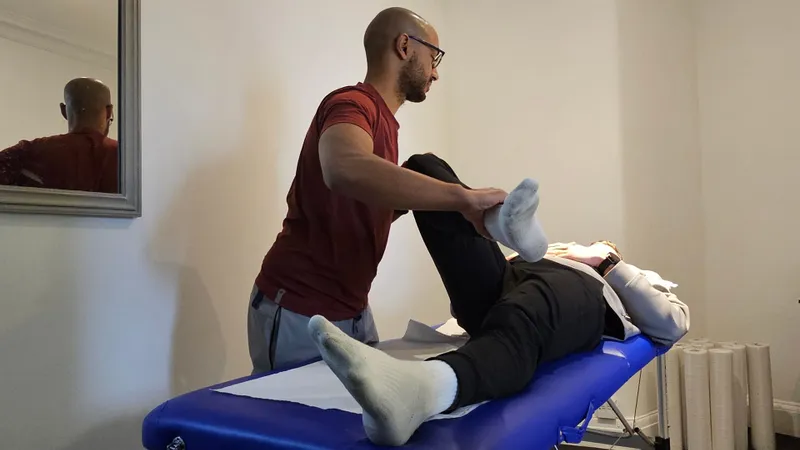
A detailed history, then a thorough examination of movement, strength and the affected area. You leave with a working diagnosis you understand and a plan agreed with you, not handed to you.
Hip and groin pain comes from several different sources, from impingement (FAI) and adductor strains to gluteal tendinopathy and hip osteoarthritis, so the plan only works once the diagnosis is right. We find which tissue has been pushed past its capacity, then rebuild its strength and load tolerance step by step.

Overview
Hip and groin pain is common in active people, and it can come from several distinct sources: the hip joint, the groin muscles or the gluteal tendons. Each has its own capacity for load, and each protests in its own way when demand climbs past it, which is why an accurate diagnosis matters before treatment begins. The common sources each behave differently:
At Kaizen we use clinical tests to localise the problem, including hip range, the FABER (Patrick) test for hip and sacroiliac sources, and resisted strength testing for the adductors and gluteals, then build a graded plan around how you train, work and move.
Most hip and groin problems respond well to progressive loading and targeted strength work that rebuilds each tissue's tolerance. We judge readiness against objective criteria and tell you honestly when imaging or a specialist opinion is warranted.
Excellent
From 6 five-star Google reviews
Source: Google
David helped me when I started to have a strong tibia pain only 5 weeks before the marathon. I genuinely thought at some point that I wasn’t going to be able to do it and I did my PB!
After suffering with terrible back pain, Gus has helped me make huge improvements. Very professional and happy to explain the processes and treatments. Many thanks
Couldn’t recommend this physio team enough! They helped me recover from a knee injury 3 weeks before the London Marathon which I thought was going to prevent me from running it! Everyone was really friendly, supportive and genuinely cared about helping me reach my goal. Special thanks to Charlie, Gus, Brad and Stef!
I came to Dave with an ongoing injury that I’ve been struggling with for months! He helped sort it out straight away, also giving me some exercises to help target the area to get back to full strength. I’m now back to running pain-free already and training properly — I’ll definitely be recommending Kaizen Physiotherapy to my clients!
Gus worked miracles to get me running a marathon after being injured 6 weeks out. He worked out the issue really quickly and provided a clear and actionable plan to deal with it. The sports massages were the best I’ve ever had too — thanks Peggy! Can’t recommend Gus and Peggy enough.
I had such a positive experience working with Brad at Kaizen. He supported me through a meniscus tear and got me all the way back to running a half marathon and HYROX training. Everything was structured, progressive, and easy to follow, and I always felt like I was in safe hands.
FAI, adductor strains, gluteal tendinopathy and hip osteoarthritis can all present as hip and groin pain, and each needs a different plan. We localise the problem with clinical tests, including hip range, the FABER test and resisted strength testing, before treatment begins.
Femoroacetabular impingement is managed with movement modification and a progressive strength programme that improves how the hip tolerates load through range. Most cases respond well to structured rehabilitation, and we tell you honestly if a specialist opinion is needed.
Adductor injuries are among the most common in football and multi-directional sport. Graded loading rebuilds adductor strength and change-of-direction tolerance step by step, so you return to kicking, cutting and sprinting with the strength to back it up.
Pain over the outer hip usually points to the gluteal tendons. We reduce the positions that compress them, such as crossed legs and sleeping on the affected side, while progressive loading rebuilds the tendon's tolerance for walking, stairs and running.
NICE guidance recommends exercise and physiotherapy as first-line care for hip osteoarthritis, ahead of considering surgery. Strengthening around the joint reduces pain and protects function, and we track progress honestly so any onward referral happens at the right time.
Hip and groin problems flare when load returns faster than capacity. We rebuild strength and control against your baseline, then stage the return to running, sport and the gym so the joint is ready for each step before you take it.
Why it happens
Femoroacetabular impingement (FAI), where the bony shapes of the hip make contact at the ends of range, often with related labral irritation
Adductor-related (groin) strain from kicking, sprinting, twisting or rapid change of direction, common in football and multi-directional sport
Gluteal tendinopathy, an overload of the gluteal tendons at the outer hip and a frequent cause of lateral hip pain, especially with prolonged compression
Hip osteoarthritis, where joint-surface changes cause deep groin or buttock pain and stiffness, more likely with age and cumulative load
Hip, gluteal or trunk strength and control deficits that leave the hip and groin underprepared for sporting loads
A rapid spike in training, running mileage or change-of-direction work without adequate adaptation time

Your initial visit runs 45–60 minutes: a detailed history, then a thorough examination of movement, strength and the affected area. We explain what we find in plain English and agree a working diagnosis together.
Treatment starts the same day, and you leave with the first exercises of a plan built around your goal.
Better than yesterday. Kaizen means continuous improvement: small, repeatable gains, built session by session, until you are back to what you love and no longer need us.


Book online through Jane and self-refer, with no GP letter needed. If you are using private health insurance, check your policy first: some insurers ask for a GP referral before your first session.
Everything starts with a proper assessment. We find what is driving the problem, treat it, and build the strength that keeps it fixed, so you finish performing, not just pain-free.
A detailed history, then a thorough examination of movement, strength and the affected area. You leave with a working diagnosis you understand and a plan agreed with you, not handed to you.

Hands-on care to settle symptoms and restore movement: manual therapy, with acupuncture, shockwave or soft-tissue work where they genuinely help. The first home exercises go with you the same day.

Progressive exercise that returns strength, control and load tolerance, from Reformer Pilates to strength and conditioning. Each follow-up reassesses against your baseline, so progress is measured rather than guessed.

Criteria-based milestones return you to work, sport and training. Discharge happens by mutual agreement once you can manage independently, with a Performance MOT available to catch the next weak link early.

Treatment approach
Sports physiotherapy localises the source of hip or groin pain with clinical testing, then delivers a progressive strength and loading plan. It is the core treatment for FAI-related pain, adductor strains and gluteal tendinopathy in active people, with criteria-based return-to-sport markers.
See treatment detail →Targeted strength and conditioning rebuilds adductor, gluteal and trunk capacity and control. It is the strongest evidence-based defence against recurrent groin and lateral hip problems, and a core element of managing hip osteoarthritis and impingement-related pain.
See treatment detail →Hands-on physiotherapy combines diagnosis, education, manual therapy and graded exercise for hip osteoarthritis and everyday hip and groin pain. It is the NICE-recommended first-line approach for hip OA, supporting movement and function ahead of considering surgery.
See treatment detail →FAQ
There are several distinct sources, which is why diagnosis matters. Pain can come from the hip joint itself (such as impingement or osteoarthritis), from the adductor muscles and tendons in the groin, or from the gluteal tendons at the outer hip. A physiotherapy assessment uses clinical tests to localise the problem before treatment, because each source is loaded and rehabilitated differently.
Usually not at first. Most hip and groin problems are diagnosed clinically and respond well to progressive loading and targeted strength work without imaging. We reserve scans for cases that do not improve as expected, where a structural cause such as a labral tear or advanced osteoarthritis is suspected, or where a specialist opinion would change your treatment.
Yes. NICE recommends exercise and physiotherapy as first-line care for hip osteoarthritis, ahead of considering surgery. A structured programme of strength work, movement and education can reduce pain, improve function and help you stay active. We build the plan around your goals and tell you honestly if and when a surgical opinion is worth seeking.
It depends on severity. Milder adductor strains often allow modified training within a couple of weeks and fuller return over several weeks; higher-grade strains need longer phases of progressive loading. We set an indicative timeline at your first session and update it at each reassessment, judging readiness on restored strength and function rather than how it feels.
Get Started
Kaizen Physiotherapy & Performance • 111 Charing Cross Road, Soho, London WC2H 0DT
BookAppointments typically available within 1–2 weeks