

Assessment
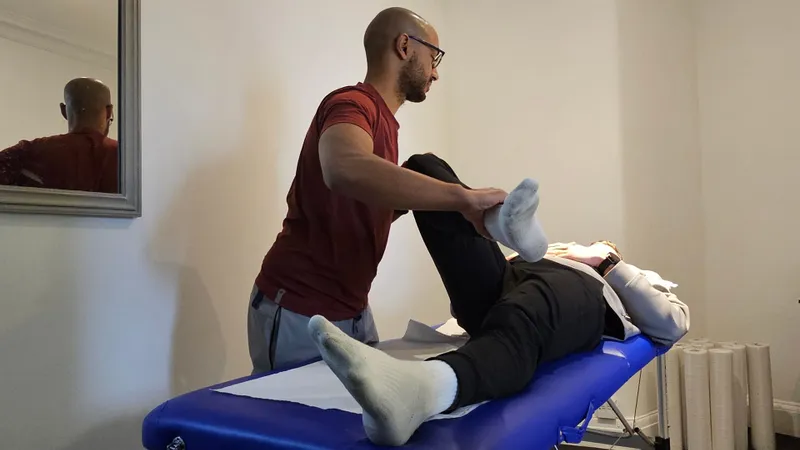
A detailed history, then a thorough examination of movement, strength and the affected area. You leave with a working diagnosis you understand and a plan agreed with you, not handed to you.
The lower back is the most commonly injured region in golf, and most golf injuries are overuse, driven by swing volume and movement restrictions rather than one bad shot. Our team screens how your body shares the rotation of the swing, then loads the back, hip, elbow, wrist or shoulder back to full capacity.

Overview
Golf looks low-impact, but the repeated high-speed rotation of the swing loads the spine and limbs hard, and most golf injuries are overuse rather than acute. They build up when the rotational demand of the swing repeatedly asks more of one region than it can give. The pain tends to cluster around a few familiar sites:
So assessment uses a movement-screening approach with movement screening tailored to the golf swing. We look at how rotation, hip mobility, thoracic movement and stability are shared across the body, because a restriction in one region often overloads another. Limited hip or thoracic rotation, for instance, commonly drives a golfer's back pain.
From there, a progressive loading plan rebuilds the strength, mobility and control the swing demands, and we make sensible adjustments to swing volume and practice load while the tissue settles. Readiness to return to full play is judged on objective markers, such as symptom-free loading and restored rotation and strength, rather than how a joint feels on the range. Where a technical change supports the rehabilitation, we can work alongside your coach.
Excellent
From 6 five-star Google reviews
Source: Google
David helped me when I started to have a strong tibia pain only 5 weeks before the marathon. I genuinely thought at some point that I wasn’t going to be able to do it and I did my PB!
After suffering with terrible back pain, Gus has helped me make huge improvements. Very professional and happy to explain the processes and treatments. Many thanks
Couldn’t recommend this physio team enough! They helped me recover from a knee injury 3 weeks before the London Marathon which I thought was going to prevent me from running it! Everyone was really friendly, supportive and genuinely cared about helping me reach my goal. Special thanks to Charlie, Gus, Brad and Stef!
I came to Dave with an ongoing injury that I’ve been struggling with for months! He helped sort it out straight away, also giving me some exercises to help target the area to get back to full strength. I’m now back to running pain-free already and training properly — I’ll definitely be recommending Kaizen Physiotherapy to my clients!
Gus worked miracles to get me running a marathon after being injured 6 weeks out. He worked out the issue really quickly and provided a clear and actionable plan to deal with it. The sports massages were the best I’ve ever had too — thanks Peggy! Can’t recommend Gus and Peggy enough.
I had such a positive experience working with Brad at Kaizen. He supported me through a meniscus tear and got me all the way back to running a half marathon and HYROX training. Everything was structured, progressive, and easy to follow, and I always felt like I was in safe hands.
We assess rotation, hip mobility, thoracic movement and stability across the whole body with golf-specific movement screening. A restriction in one region quietly overloads another, and finding it is usually the story behind a recurring golf injury.
The lower back is the most commonly injured region in golf, loaded by repeated high-speed rotation and side-bending. We calm the flare, then rebuild rotational strength and hip and thoracic mobility so the spine stops absorbing what the hips should be sharing.
Medial elbow tendinopathy and wrist problems come from repeated impact and grip load. Load modification plus progressive forearm strengthening rebuilds tolerance, with our hand therapist involved where the wrist or thumb needs splinting or specialist care.
The lead hip absorbs large rotational loads through impact and follow-through, and impingement-type pain and restriction are common there. Targeted mobility and strength work restore the rotation your swing otherwise borrows from the lower back.
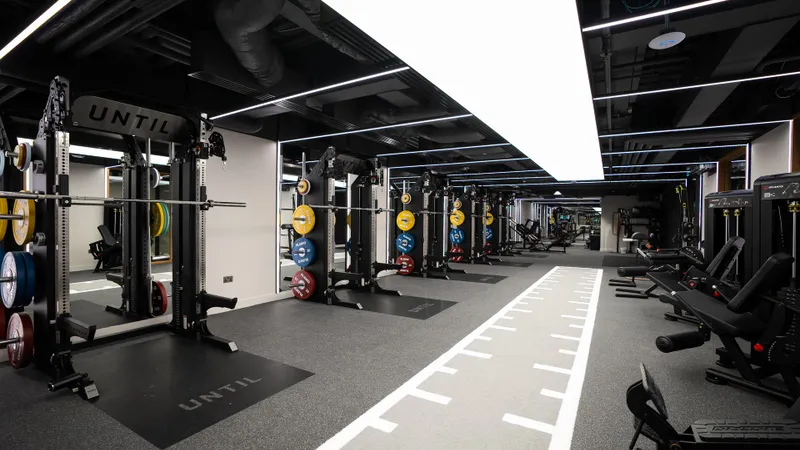
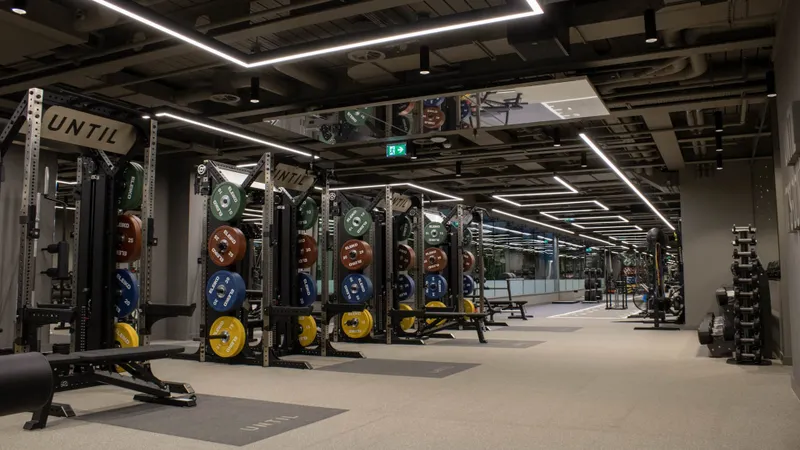
Strength and conditioning for golf trains the trunk, hips and shoulders to produce and absorb rotation. More capacity means more swing volume without overload, which is what lets you practise, play and compete through a full season.
Most golf injuries are overuse problems, so small swing-load adjustments often let you stay on the course during rehabilitation. We manage practice volume alongside the physical work, then build it back up as your tolerance returns.
Why it happens
Repeated high-speed trunk rotation and side-bending through the swing, the dominant load on the golfer's lower back
Limited hip or thoracic rotation, which shifts rotational load onto the lumbar spine and lead-side hip
Repetitive gripping and wrist loading, driving medial elbow (golfer's elbow) and wrist tendinopathy
Impact with the ground or a mat: fat shots and heavy turf contact loading the wrist and elbow
A spike in practice or playing volume without a build-up, the classic overuse trigger
Strength, mobility or control deficits up the chain that leave one region absorbing more than its share

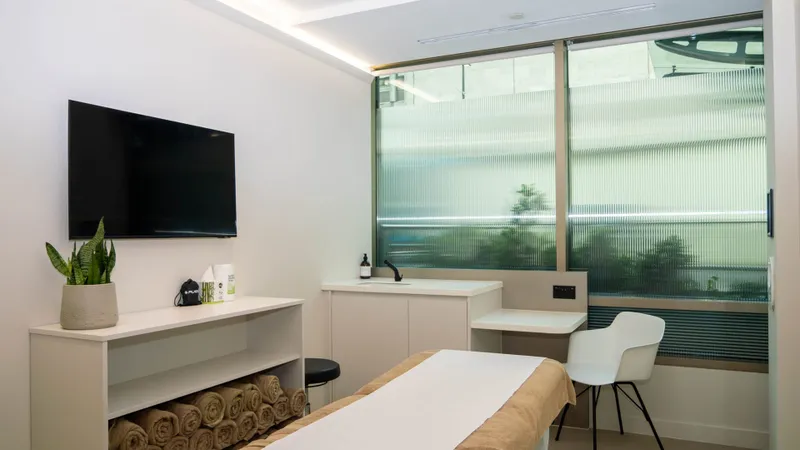
Your initial visit runs 45–60 minutes: a detailed history, then a thorough examination of movement, strength and the affected area. We explain what we find in plain English and agree a working diagnosis together.
Treatment starts the same day, and you leave with the first exercises of a plan built around your goal.
Better than yesterday. Kaizen means continuous improvement: small, repeatable gains, built session by session, until you are back to what you love and no longer need us.


Book online through Jane and self-refer, with no GP letter needed. If you are using private health insurance, check your policy first: some insurers ask for a GP referral before your first session.
Everything starts with a proper assessment. We find what is driving the problem, treat it, and build the strength that keeps it fixed, so you finish performing, not just pain-free.
A detailed history, then a thorough examination of movement, strength and the affected area. You leave with a working diagnosis you understand and a plan agreed with you, not handed to you.

Hands-on care to settle symptoms and restore movement: manual therapy, with acupuncture, shockwave or soft-tissue work where they genuinely help. The first home exercises go with you the same day.

Progressive exercise that returns strength, control and load tolerance, from Reformer Pilates to strength and conditioning. Each follow-up reassesses against your baseline, so progress is measured rather than guessed.

Criteria-based milestones return you to work, sport and training. Discharge happens by mutual agreement once you can manage independently, with a Performance MOT available to catch the next weak link early.

Treatment approach
A movement screen in the spirit of golf-specific assessment maps how rotation, hip and thoracic mobility and stability are shared across the body, identifying the restriction that is overloading the painful region. It is the starting point for a targeted golf rehabilitation plan.
See treatment detail →Sports physiotherapy is the core treatment: accurate diagnosis of the back, hip, elbow, wrist or shoulder problem, a graded loading plan, and a criteria-based return to full swing volume rather than discharging on how a joint feels.
See treatment detail →Targeted strength and mobility work rebuilds the rotational capacity, hip and thoracic movement and stability the golf swing demands, addressing the underlying deficits that let one region overload another and reducing recurrence.
See treatment detail →FAQ
The golf swing loads the lower back with repeated high-speed rotation and side-bending, so it is the region golfers injure most. Often the back is compensating for limited rotation elsewhere: a stiff lead hip or restricted thoracic spine forces the lumbar spine to do more. A movement screen helps find that restriction so we treat the cause, not just the back.
Golfer's elbow is a tendinopathy of the tendons on the inner side of the elbow, irritated by repeated gripping and wrist loading. It responds well to progressive loading of the forearm tendons, grip and practice-volume adjustments, and addressing any technique factor. Rest alone rarely fixes it, because the tendon needs graded load to rebuild capacity. Most cases settle without injection or surgery.
Rarely completely. Most golf injuries respond better to adjusted load than to full rest, so we typically reduce practice volume, range time or rounds to a level the tissue tolerates, then build back up. Some problems benefit from a short break from full swings while we load the tissue in other ways. Your physiotherapist will tell you what to modify.
Yes, where it helps. If a movement restriction or a technical pattern is contributing to your injury, we can liaise with your coach so the rehabilitation and any swing change pull in the same direction. We focus on the physical capacity and movement; your coach owns the technique. Together that is usually the most durable outcome.
Get Started
Kaizen Physiotherapy & Performance • 111 Charing Cross Road, Soho, London WC2H 0DT
BookAppointments typically available within 1–2 weeks