


Assessment
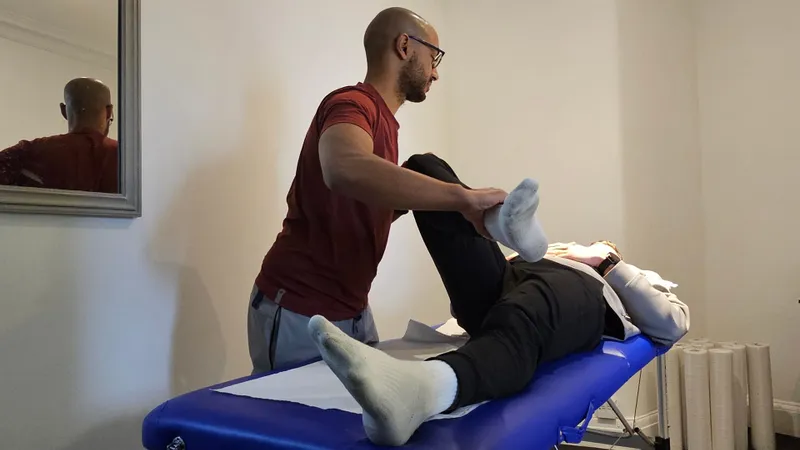
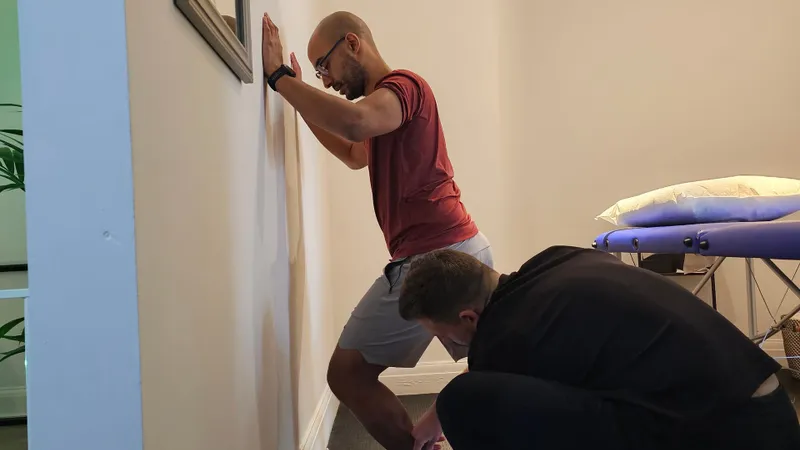
A detailed history, then a thorough examination of movement, strength and the affected area. You leave with a working diagnosis you understand and a plan agreed with you, not handed to you.
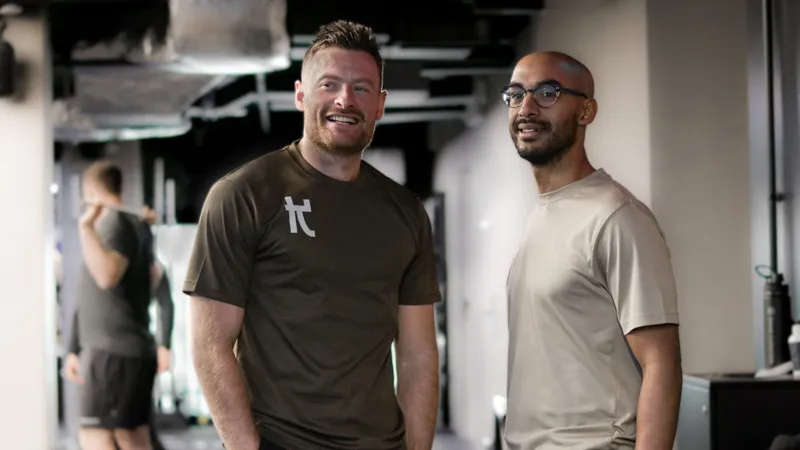
Football loads the lower limb hard, so hamstrings, ankles, knees and groins take most of the hits. Our team, led by a clinician who has worked in professional football, gets you back to the game itself, not just out of pain.

Overview
Almost every football injury comes down to one thing: demand outrunning what the tissue can take. A hamstring is built to bend the knee and soak up the forces of sprinting. Push it past its capacity and it gives way.
We call this the injury bucket: capacity on one side, demand on the other. It is the lens we treat you through, and it starts with pinning down the diagnosis. The most common are:
Our clinical lead worked as a physiotherapist in professional football, so the assessment and rehab principles from the elite game apply to your level, delivered by the whole team. First we find which tissue overflowed, and why, then build the bucket bigger: settling the injury, then growing the strength and capacity that stops it coming back.
Excellent
From 6 five-star Google reviews
Source: Google
David helped me when I started to have a strong tibia pain only 5 weeks before the marathon. I genuinely thought at some point that I wasn’t going to be able to do it and I did my PB!
After suffering with terrible back pain, Gus has helped me make huge improvements. Very professional and happy to explain the processes and treatments. Many thanks
Couldn’t recommend this physio team enough! They helped me recover from a knee injury 3 weeks before the London Marathon which I thought was going to prevent me from running it! Everyone was really friendly, supportive and genuinely cared about helping me reach my goal. Special thanks to Charlie, Gus, Brad and Stef!
I came to Dave with an ongoing injury that I’ve been struggling with for months! He helped sort it out straight away, also giving me some exercises to help target the area to get back to full strength. I’m now back to running pain-free already and training properly — I’ll definitely be recommending Kaizen Physiotherapy to my clients!
Gus worked miracles to get me running a marathon after being injured 6 weeks out. He worked out the issue really quickly and provided a clear and actionable plan to deal with it. The sports massages were the best I’ve ever had too — thanks Peggy! Can’t recommend Gus and Peggy enough.
I had such a positive experience working with Brad at Kaizen. He supported me through a meniscus tear and got me all the way back to running a half marathon and HYROX training. Everything was structured, progressive, and easy to follow, and I always felt like I was in safe hands.
Our clinical lead worked as a physiotherapist in professional football, including eight years in Chelsea's academy, and the whole team applies the same assessment principles to your level. Diagnosis comes first: which tissue, what it tolerates and what the game demands of it.
Hamstrings are football's most frequent injury and among its most recurrent. Graded loading rebuilds strength through range, then sprinting is reintroduced progressively, because high-speed running is both the mechanism of injury and the test of a genuine recovery.
Rolled ankles and twisted knees, including ACL and MCL injuries, need staged rehabilitation to restore stability and confidence. We work to criteria at each stage, with post-surgical rehabilitation available when a reconstruction is involved, so the pathway continues under one roof.
Repeated kicking and change of direction load the adductors hard, which is why groin problems shadow the game at every level. Progressive strengthening rebuilds the capacity behind striking and cutting, with the return staged from straight-line running to full match play.
The final stage rebuilds football-specific demands: sprinting, cutting, landing and contact tolerance. Readiness is judged with criteria-based markers, in line with the BJSM Bern consensus, because returning before the tests are passed is a well-recognised driver of re-injury.
A previous injury is one of football's strongest risk factors for the next. We finish the rehabilitation past the point symptoms stop, fix strength and control deficits up the chain and hand you a maintenance plan that fits around training and matches.
Why it happens
High-speed sprinting and rapid acceleration or deceleration, the classic hamstring strain mechanism
Twisting, cutting or pivoting on a planted foot, the common non-contact mechanism for ACL and knee ligament injury
Direct contact: tackles, collisions and blows to a loaded joint, driving MCL and ankle injuries
Repeated kicking and change of direction, which load the groin and adductor muscles
Returning to play too soon after a previous strain, leaving residual weakness and altered movement
Inadequate warm-up, fatigue late in a match, or a sudden spike in training or match load

Your initial visit runs 45–60 minutes: a detailed history, then a thorough examination of movement, strength and the affected area. We explain what we find in plain English and agree a working diagnosis together.
Treatment starts the same day, and you leave with the first exercises of a plan built around your goal.
Better than yesterday. Kaizen means continuous improvement: small, repeatable gains, built session by session, until you are back to what you love and no longer need us.


Book online through Jane and self-refer, with no GP letter needed. If you are using private health insurance, check your policy first: some insurers ask for a GP referral before your first session.
Everything starts with a proper assessment. We find what is driving the problem, treat it, and build the strength that keeps it fixed, so you finish performing, not just pain-free.
A detailed history, then a thorough examination of movement, strength and the affected area. You leave with a working diagnosis you understand and a plan agreed with you, not handed to you.

Hands-on care to settle symptoms and restore movement: manual therapy, with acupuncture, shockwave or soft-tissue work where they genuinely help. The first home exercises go with you the same day.

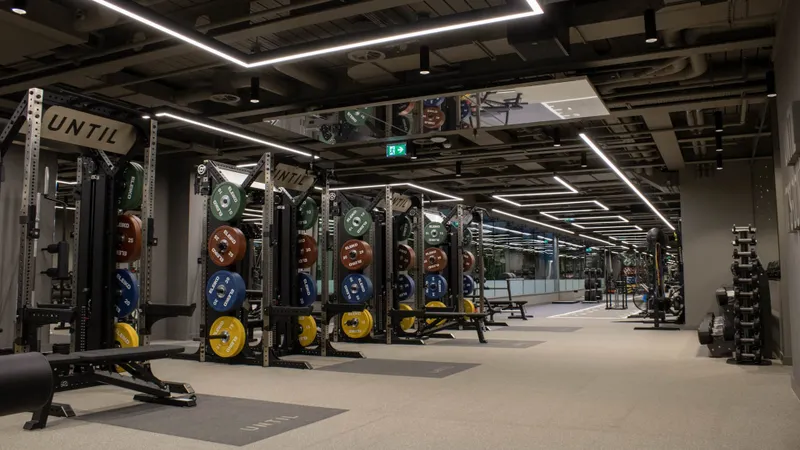
Progressive exercise that returns strength, control and load tolerance, from Reformer Pilates to strength and conditioning. Each follow-up reassesses against your baseline, so progress is measured rather than guessed.

Criteria-based milestones return you to work, sport and training. Discharge happens by mutual agreement once you can manage independently, with a Performance MOT available to catch the next weak link early.

Treatment approach
Sports physiotherapy is the core treatment for football injuries: accurate diagnosis, a graded loading plan that rebuilds the running, cutting and kicking demands of the game, and criteria-based return-to-play rather than discharging on how the injury feels.
See treatment detail →Progressive strength work, particularly eccentric hamstring loading and adductor strengthening, raises tissue capacity and is among the best-evidenced ways to reduce the high re-injury rate of football muscle strains.
See treatment detail →FAQ
Not always. The decision depends on knee stability, your symptoms and the demands you want to return to, and pivoting sports like football raise the case for surgery. Some people manage well with structured rehabilitation alone. We assess the knee, explain the options honestly and, where surgery is indicated, work alongside your surgeon through the post-operative phases.
It varies with the grade of strain. Minor strains may allow a return over a few weeks; more significant tears need longer, progressive loading. Hamstring injuries have a notable re-injury rate when rehabilitation is rushed, so we return you on objective criteria, such as restored strength, sprint tolerance and movement control, rather than on how the leg feels.
Recurrent hamstring strains usually reflect residual weakness, incomplete rehabilitation after a previous injury, or sprint loads outpacing the muscle's current capacity. The strongest defence is progressive strength work, particularly eccentric loading, combined with a criteria-based return that confirms the muscle can handle full-speed running before you go back to matches.
Seek urgent help if the joint looks deformed, gives way completely, or you heard a loud pop with rapid swelling, or if you have numbness, tingling or a cold, discoloured limb. Call 999 for these. Contact NHS 111 if you cannot bear weight, swelling or pain is severe, or there is no improvement after a few days of self-care.
Get Started
Kaizen Physiotherapy & Performance • 111 Charing Cross Road, Soho, London WC2H 0DT
BookAppointments typically available within 1–2 weeks