
Assessment
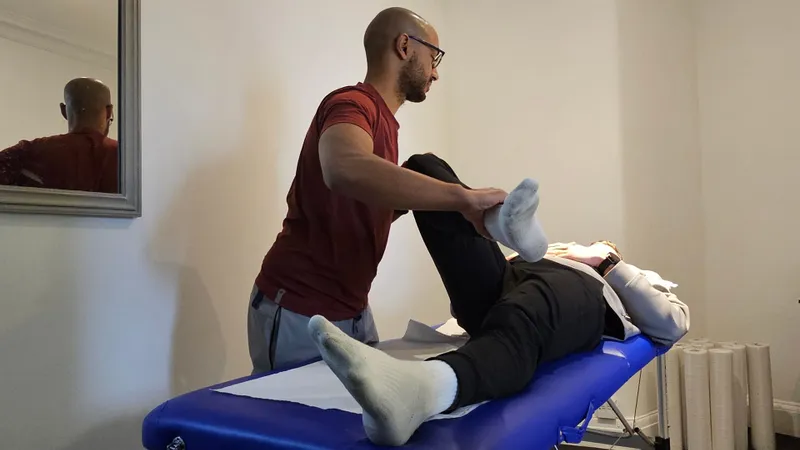
A detailed history, then a thorough examination of movement, strength and the affected area. You leave with a working diagnosis you understand and a plan agreed with you, not handed to you.
Tennis and golfer's elbow, carpal tunnel, RSI, wrist sprains, post-surgical hands: upper-limb pain usually means a small structure is being loaded faster than it can take. We combine specialist hand therapy with graded loading to settle the symptoms and rebuild the capacity your work and sport demand of it.

Overview
Hand, wrist and elbow pain, in desk-based and active people alike, usually comes down to load applied faster than the tissue can take it. Get the diagnosis right and the rehabilitation works; guess at it and it stalls.
The common problems each behave differently:
At Kaizen our hand-therapy assessment identifies the specific tissue and the overload behind it, then builds a loading plan around how you actually type, train and lift. We refer for nerve studies, imaging or a hand-surgery opinion when that is the right next step. Self-referral; no GP referral needed.
Excellent
From 6 five-star Google reviews
Source: Google
David helped me when I started to have a strong tibia pain only 5 weeks before the marathon. I genuinely thought at some point that I wasn’t going to be able to do it and I did my PB!
After suffering with terrible back pain, Gus has helped me make huge improvements. Very professional and happy to explain the processes and treatments. Many thanks
Couldn’t recommend this physio team enough! They helped me recover from a knee injury 3 weeks before the London Marathon which I thought was going to prevent me from running it! Everyone was really friendly, supportive and genuinely cared about helping me reach my goal. Special thanks to Charlie, Gus, Brad and Stef!
I came to Dave with an ongoing injury that I’ve been struggling with for months! He helped sort it out straight away, also giving me some exercises to help target the area to get back to full strength. I’m now back to running pain-free already and training properly — I’ll definitely be recommending Kaizen Physiotherapy to my clients!
Gus worked miracles to get me running a marathon after being injured 6 weeks out. He worked out the issue really quickly and provided a clear and actionable plan to deal with it. The sports massages were the best I’ve ever had too — thanks Peggy! Can’t recommend Gus and Peggy enough.
I had such a positive experience working with Brad at Kaizen. He supported me through a meniscus tear and got me all the way back to running a half marathon and HYROX training. Everything was structured, progressive, and easy to follow, and I always felt like I was in safe hands.
Tendon, nerve, joint and ligament problems in the hand and wrist behave differently and need different plans. Our specialist assessment identifies the tissue and the load behind it, and we refer for nerve studies or a hand-surgery opinion when that is the right step.
Both are forearm tendon-overload problems, and rest alone tends to fail. Load modification plus progressive forearm exercise settles pain faster and rebuilds the grip and lifting tolerance your work and training demand, in line with NICE summaries for tennis elbow.
NHS guidance puts conservative care first: night wrist splints, activity changes and graded rehabilitation help many people avoid injections or surgery altogether. If symptoms persist or worsen, we say so early and route you to the right opinion promptly.
Custom splinting from our hand therapist protects healing ligaments, tendon repairs and irritable joints while you keep using the rest of the hand. Splints are made and adjusted for your anatomy and your job, then weaned as the tissue recovers.
Typing, gripping and lifting all day load small structures faster than they adapt. Graded strengthening of the forearm, wrist and shoulder rebuilds the capacity behind everyday tasks, from opening jars and carrying bags to racket sports and climbing.
After hand or wrist surgery or a fracture, structured rehabilitation restores movement, strength and confidence. We manage scars, swelling and stiffness within your surgeon's guidance, and stage the load week by week so the repair stays protected while everyday function returns.
Why it happens
Repetitive or sustained gripping, typing and mouse use that loads the forearm tendons and wrist faster than they can adapt, the common driver of tennis elbow, golfer's elbow and RSI
Median-nerve compression at the wrist (carpal tunnel syndrome), often aggravated by sustained wrist postures, repetitive load, pregnancy, or certain health conditions
An acute wrist sprain or fall on an outstretched hand, straining the ligaments and soft tissue of the wrist
A rapid increase in gym, racquet, or climbing load that overloads the elbow and wrist tendons without adequate recovery
Strength and capacity deficits in the forearm, wrist, and shoulder, so the smaller structures absorb load they are not conditioned for
Recovery after hand or wrist surgery or a fracture, where stiffness and reduced strength need structured, graded rehabilitation

Your initial visit runs 45–60 minutes: a detailed history, then a thorough examination of movement, strength and the affected area. We explain what we find in plain English and agree a working diagnosis together.
Treatment starts the same day, and you leave with the first exercises of a plan built around your goal.
Better than yesterday. Kaizen means continuous improvement: small, repeatable gains, built session by session, until you are back to what you love and no longer need us.


Book online through Jane and self-refer, with no GP letter needed. If you are using private health insurance, check your policy first: some insurers ask for a GP referral before your first session.
Everything starts with a proper assessment. We find what is driving the problem, treat it, and build the strength that keeps it fixed, so you finish performing, not just pain-free.
A detailed history, then a thorough examination of movement, strength and the affected area. You leave with a working diagnosis you understand and a plan agreed with you, not handed to you.

Hands-on care to settle symptoms and restore movement: manual therapy, with acupuncture, shockwave or soft-tissue work where they genuinely help. The first home exercises go with you the same day.

Progressive exercise that returns strength, control and load tolerance, from Reformer Pilates to strength and conditioning. Each follow-up reassesses against your baseline, so progress is measured rather than guessed.

Criteria-based milestones return you to work, sport and training. Discharge happens by mutual agreement once you can manage independently, with a Performance MOT available to catch the next weak link early.

Treatment approach
Specialist hand-therapy assessment identifies the affected tissue, whether tendon, nerve, joint or ligament, and combines splinting, activity modification, manual techniques and a graded exercise plan, the core approach for elbow, wrist and post-surgical hand conditions.
See treatment detail →Hands-on physiotherapy addresses the wider chain of forearm, wrist and shoulder strength and control, and delivers the progressive loading that rebuilds tendon and tissue capacity rather than only settling symptoms.
See treatment detail →FAQ
Tennis elbow is often self-limiting and many cases improve over months, which NICE Clinical Knowledge Summaries reflect. However, complete rest tends to let the tendon lose capacity, so symptoms return with activity. Load modification combined with progressive forearm exercise usually settles pain faster and rebuilds tolerance, and that is what hand-therapy rehabilitation provides.
Not usually as a first step. NHS guidance recommends conservative measures first, such as a night wrist splint and modifying aggravating activities, which help many people. A steroid injection may be offered if splinting does not work. Surgery is considered only when symptoms are severe, persistent or worsening, and we refer appropriately when a surgical opinion is warranted.
Both are tendon-overload problems of the forearm, but they affect opposite sides of the elbow. Tennis elbow (lateral epicondylalgia) causes pain on the outer elbow, typically with gripping and lifting. Golfer's elbow (medial epicondylalgia) causes pain on the inner elbow. Both respond to load modification and progressive loading rather than rest alone.
Seek urgent care if you have severe pain after trauma, an obvious deformity, you cannot move or use the hand, or there is rapidly spreading redness, fever, or numbness with significant weakness. Persistent night-time numbness, wasting of the thumb muscles, or symptoms that steadily worsen also warrant prompt assessment and possible nerve studies.
Get Started
Kaizen Physiotherapy & Performance • 111 Charing Cross Road, Soho, London WC2H 0DT
BookAppointments typically available within 1–2 weeks