Neck & Shoulder Pain — Physiotherapy in London
Most mechanical neck pain and common shoulder problems — rotator-cuff related pain, impingement, and frozen shoulder — settle well with physiotherapy, exercise, and manual therapy. We provide NICE-aligned care across our four London clinics, with no GP referral needed. Book online by self-referral through Jane.
Book Consultation
What you're seeing
The concern
Why it happens
What drives it
- Sustained desk postures — long screen hours with a forward-head, rounded-shoulder pattern loading the neck and upper trapezius
- Rotator-cuff related shoulder pain from repetitive overhead loading or a sudden training spike
- Subacromial impingement — irritation of cuff tendons in the space beneath the acromion
- Frozen shoulder (adhesive capsulitis) — often spontaneous, more common between 40 and 60
- Mechanical neck strain after awkward sleeping positions, sudden movements, or whiplash-type incidents
- Scapular and postural control issues that amplify neck and shoulder loading
- Stress, poor sleep, and low mood — well-evidenced amplifiers of musculoskeletal pain
Treatment approach
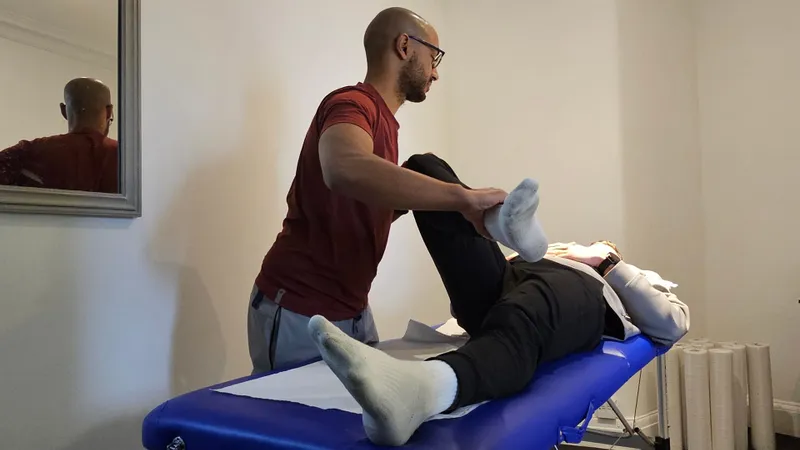
How David treats it
Physiotherapy
Price on enquiryAssessment, manual therapy, and progressive loading exercise is the NICE-aligned first-line approach for both mechanical neck pain and the common non-traumatic shoulder problems, rebuilding strength and load tolerance.
See treatment detail →Acupuncture
Price on enquiryOffered by our AACP-registered physiotherapists as an adjunct to help manage persistent neck and shoulder pain alongside the core rehabilitation plan, never as a stand-alone treatment.
See treatment detail →Reformer Pilates
Price on enquiryReformer-based work develops the deep neck, scapular, and postural control that protects desk-bound workers from recurrence, complementing the active rehab Gus prescribes.
See treatment detail →FAQ
Common
questions
When should I worry about neck or shoulder pain?
Seek urgent care if neck pain follows significant trauma, or comes with arm weakness, persistent pins and needles, or problems with balance or walking. Go to A&E for severe pain after a fall, or if you feel generally unwell with fever. Otherwise, most mechanical neck and shoulder pain settles well with physiotherapy and self-management.
Do I need a scan for my neck or shoulder pain?
Usually not as a first step. NICE advises against routine imaging for non-specific neck pain and early shoulder pain, because scans often show changes that are common in pain-free people and rarely alter treatment. Imaging becomes appropriate after significant trauma, with genuine red flags, or when symptoms fail to improve with rehabilitation over several weeks.
How long does frozen shoulder take to get better?
Frozen shoulder typically passes through three phases — freezing (painful), frozen (stiff), and thawing (resolution) — which together can last well over a year. Physiotherapy helps throughout: managing pain, maintaining movement, and supporting the thawing phase. We avoid aggressive stretching while it is most painful and build mobility gradually as symptoms settle. Timelines vary between individuals.
Can desk work really cause neck and shoulder pain?
Sustained desk postures are a common contributor, particularly a forward-head and rounded-shoulder position held for hours. This loads the neck and upper trapezius and can stiffen the shoulders. The fix is rarely one perfect posture — it is movement variety, breaks, and building strength. Our physiotherapists address workstation habits alongside a tailored exercise plan.
Related Concerns

Get Started
Ready to begin?
Book today.
Kaizen Physiotherapy & Performance • 111 Charing Cross Road, Tottenham Court Road, London WC2H 0DT
BookAppointments typically available within 1–2 weeks