Hand, Wrist & Elbow Pain — Physiotherapy in London
Assessment and rehabilitation of upper-limb pain — tennis and golfer's elbow, carpal tunnel syndrome, RSI and overuse, wrist sprains, and post-surgical hand recovery. We combine hand therapy with graded loading to settle symptoms and rebuild the capacity your work and sport demand.
Book Consultation
What you're seeing
The concern
Why it happens
What drives it
- Repetitive or sustained gripping, typing, and mouse use that loads the forearm tendons and wrist faster than they can adapt — the common driver of tennis elbow, golfer's elbow, and RSI
- Median-nerve compression at the wrist (carpal tunnel syndrome), often aggravated by sustained wrist postures, repetitive load, pregnancy, or certain health conditions
- An acute wrist sprain or fall on an outstretched hand, straining the ligaments and soft tissue of the wrist
- A rapid increase in gym, racquet, or climbing load that overloads the elbow and wrist tendons without adequate recovery
- Strength and capacity deficits in the forearm, wrist, and shoulder, so the smaller structures absorb load they are not conditioned for
- Recovery after hand or wrist surgery or a fracture, where stiffness and reduced strength need structured, graded rehabilitation
Treatment approach
How David treats it
Hand Therapy
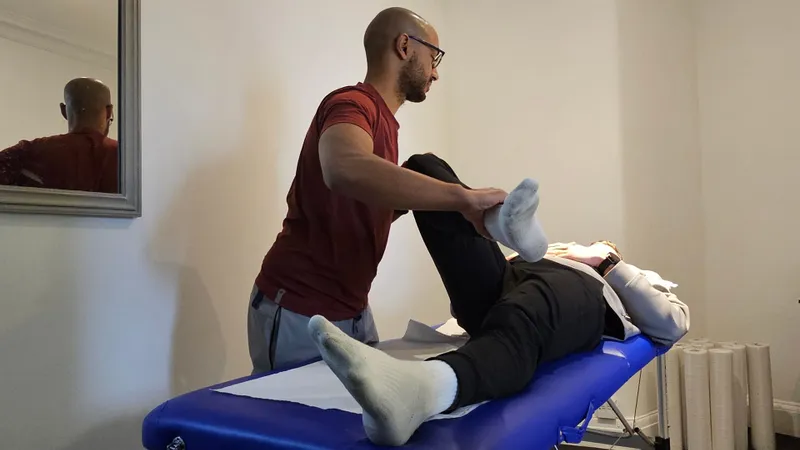
Price on enquirySpecialist hand-therapy assessment identifies the affected tissue — tendon, nerve, joint, or ligament — and combines splinting, activity modification, manual techniques, and a graded exercise plan, the core approach for elbow, wrist, and post-surgical hand conditions.
See treatment detail →Physiotherapy
Price on enquiryHands-on physiotherapy addresses the wider chain — forearm, wrist, and shoulder strength and control — and delivers the progressive loading that rebuilds tendon and tissue capacity rather than only settling symptoms.
See treatment detail →FAQ
Common
questions
Will tennis elbow get better on its own?
Tennis elbow is often self-limiting and many cases improve over months, which NICE Clinical Knowledge Summaries reflect. However, complete rest tends to let the tendon lose capacity, so symptoms return with activity. Load modification combined with progressive forearm exercise usually settles pain faster and rebuilds tolerance, which is what hand-therapy rehabilitation provides.
Do I need surgery for carpal tunnel syndrome?
Not usually as a first step. NHS guidance recommends conservative measures first — a night wrist splint and modifying aggravating activities — which help many people. A steroid injection may be offered if splinting does not work. Surgery is considered only when symptoms are severe, persistent, or worsening, and we refer appropriately when a surgical opinion is warranted.
What is the difference between tennis elbow and golfer's elbow?
Both are tendon-overload problems of the forearm, but they affect opposite sides of the elbow. Tennis elbow (lateral epicondylalgia) causes pain on the outer elbow, typically with gripping and lifting. Golfer's elbow (medial epicondylalgia) causes pain on the inner elbow. Both respond to load modification and progressive loading rather than rest alone.
When should I worry about hand, wrist, or elbow pain?
Seek urgent care if you have severe pain after trauma, an obvious deformity, you cannot move or use the hand, or there is rapidly spreading redness, fever, or numbness with significant weakness. Persistent night-time numbness, wasting of the thumb muscles, or symptoms that steadily worsen also warrant prompt assessment and possible nerve studies.
Related Concerns
Get Started
Ready to begin?
Book today.
Kaizen Physiotherapy & Performance • 111 Charing Cross Road, Tottenham Court Road, London WC2H 0DT
BookAppointments typically available within 1–2 weeks